

A grueling winter
My long and unglamorous moving abroad tale

The other day, I sat down to count exactly how many newsletter dispatches I’ve sent since I moved to Germany in October. The answer is a sharp departure from my typical cadence of one per week.
Many of my recent posts have mentioned that I have been underwater, buried in work, submerged in the stress of a transatlantic relocation. The truth is, these past months have been some of the hardest of recent memory.
I don’t say that to make excuses for why I haven’t written (although I do hope you will excuse me, so perhaps there is a little of that).
Rather, I want to be brutally honest so that when people observe my life from afar and marvel at my ability to move to a new country easily, or think that moving abroad is very glamorous and cool, they will know how very unglamorous the reality has been.

The truth is that I spent most of the dark winter indoors, often sitting at my computer for more than 10 hours a day and feeling completely insecure about the future.
When I was young, I often picked up and moved to a new country without a second thought. At the time, I didn’t make enough money to owe taxes anywhere, and I felt extremely comfortable living in the most affordable place I could find. I wasn’t exactly a squatter, but I wasn’t far off. The legality of my housing arrangements was a vague, distant consideration. I never made plans to stay anywhere and had very little idea of where I wanted to “end up.”
I worried about the future, mostly about whether I would ever build a viable career. But overall, I took for granted how incredibly simple my life was, how much freedom I truly enjoyed.
When I moved to Germany several months after my 40th birthday, I naively thought this next move would be as simple as all that. I don’t need a visa to live and work in Germany, so what could possibly be so difficult? It turns out, quite a lot.
The quest for an “Anmeldung.”
When I first moved to Berlin, I opted to stay in a sublet for the first few months while I looked for permanent housing. If you look at the websites for short-term housing in Berlin, you will see that a lot of places say whether or not they offer “Anmeldung.”
In Germany, an Anmeldung is the registration of your official address with the local authorities (Bürgeramt). Each residence has a specific number of people permitted to obtain an Anmeldung there, and a landlord is obligated to provide you with the paperwork to register if you are living there legally.
BUT (big but), in Berlin, a lot of people sublet their apartments “illegally” without offering Anmeldung. That’s usually because they are only leaving for a few weeks or months. They are already registered in their apartments, and they’re not going to offer their coveted spot to you. My guess is that most short-term housing in Berlin does not offer Anmeldung.
So, I wondered, what’s the big deal? How important could this be? Surely I don’t need to register my address as soon as I arrive.
Wrong.
If you are planning to live and work legally in Germany, you need an Anmeldung for practically everything. You can’t get a tax number without it. You can open a bank account (with some banks), but the bank will immediately start asking for your tax number, which you cannot get without the Anmeldung. Banks can close your account if you do not provide your tax number within a few months.
Also, you are legally obliged to obtain an Anmeldung within 14 days of moving into a new home. This is rarely enforced, but the government can theoretically impose a fine if you do not register.
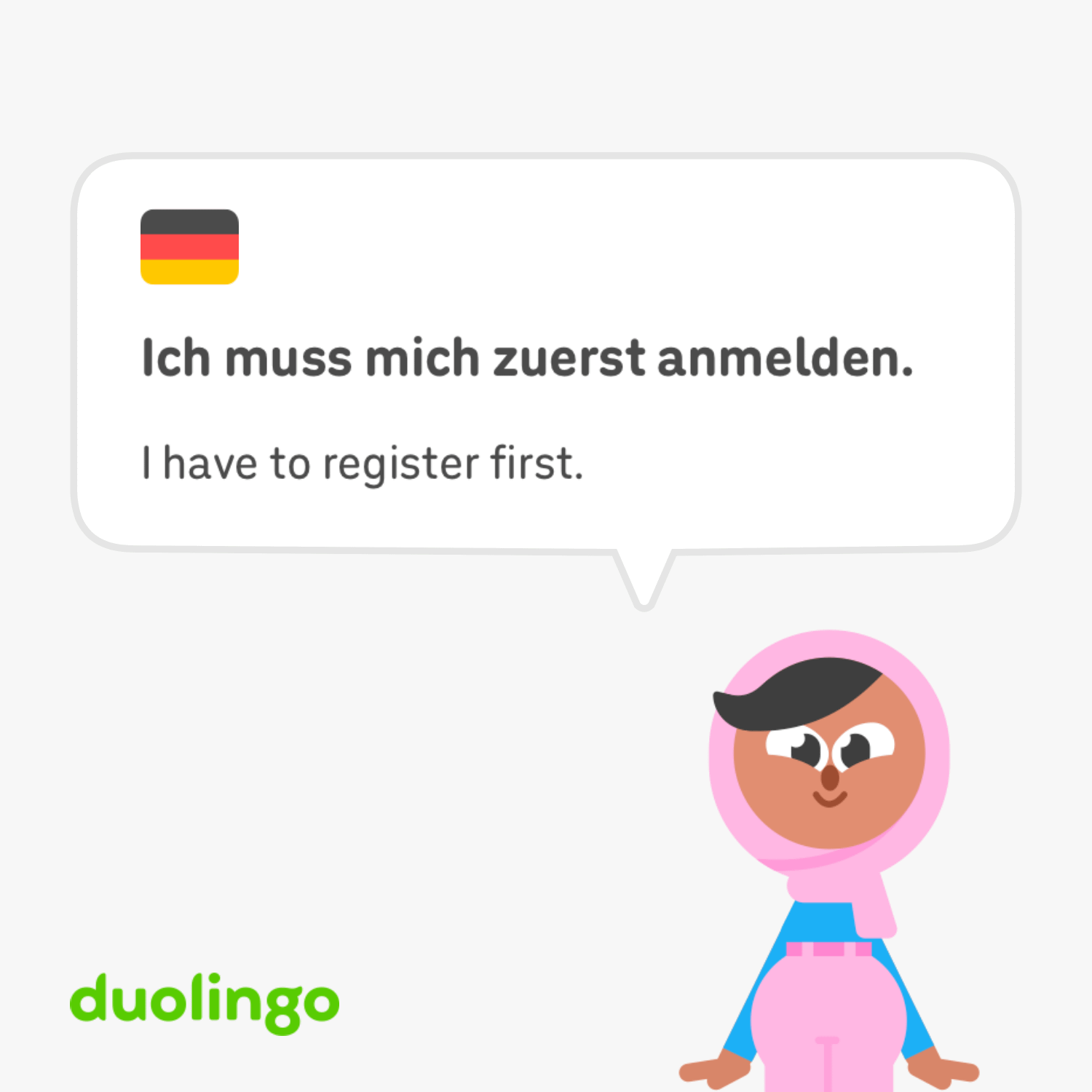
Needless to say, this causes some difficulties for a person who, like me, arrived in the country and started a new job, was paid into a German bank account, but lived in a Bulgarian man’s flat for the first 6 months without Anmeldung.
That meant I had to find an alternative way to obtain a tax number. I won’t go into details about how I did this, but I was nearly desperate to get my tax situation in order so my bank account wouldn't be frozen. Who knew I would have to go to such lengths just to pay taxes?
Now, exactly seven months after my arrival, I do have a tax number. But I still need a VAT (value-added tax) number to file quarterly reports with the European Union and the German government. My German tax preparer has filed a request with the tax authorities, and I am just….waiting and waiting for them to contact me. I am told that this is normal, and there is nothing I can do but wait.
OK, so now I need a real place to live
For the first months after I arrived in Berlin, my cat and I stayed in the Bulgarian man’s illegal sublet, which was, I admit, perfectly fine.
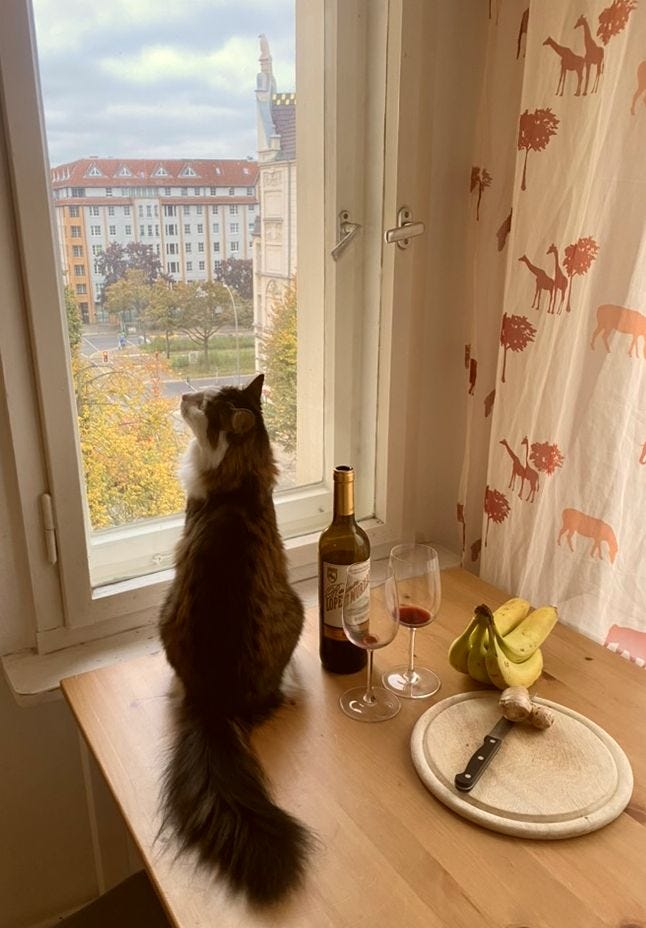
Said Bulgarian didn’t know I had brought a cat with me from America, but he never asked, so I assumed it was fine. I also went to great lengths to ensure the little fluff didn’t destroy his furniture, even piling armchairs on top of his bunkbed so she couldn’t scratch them.
But I soon began to wonder what I would have to do to find a place of my own.
Well, it turns out that Germany’s many rules are tailor-made for people who have been living in the country for a while. To apply for housing, you need to provide your last three pay slips and a variety of other documents that you can only obtain if you’ve been in the country for some time.
If you are a freelancer, for example, you need to show records of previous tax payments to apply for an apartment.
In other words, if you’re a freelancer arriving in Germany, you need to show potential landlords the German tax records you don’t yet have just to apply for the housing that allows you to get a tax number in the first place. 😵💫 Kafka, watch out.
What’s more, Berlin has a housing crisis. Hundreds of people are applying to see every vacant apartment. If you’re lucky enough to get a viewing, you are sharing each viewing with dozens of competitors. Good luck ever trying to speak directly to the leasing agent.
The fact that your ability to obtain a tax number is connected to finding permanent housing when the housing market is this thoroughly bonked seems like a special type of cruelty to me.
Needless to say, I spent the first three months in Berlin holding my breath, working to compile the documents to begin applying for an apartment in January, exactly three months after my arrival.
Once I had my documents in order, I spent every second of my free time on ImmoScout, rapidly applying to view any and every apartment that was even remotely within my price range. I often applied to every new available listing on the site each day.
If a leasing agent offered me a viewing, I submitted the application even if I didn’t have time to see the flat (viewings are always in the middle of the workday and cannot be rescheduled).
In fact, that is how I eventually found an apartment. I signed a lease without ever seeing the place, and without even knowing if it had a bathroom (there was none in the photos).
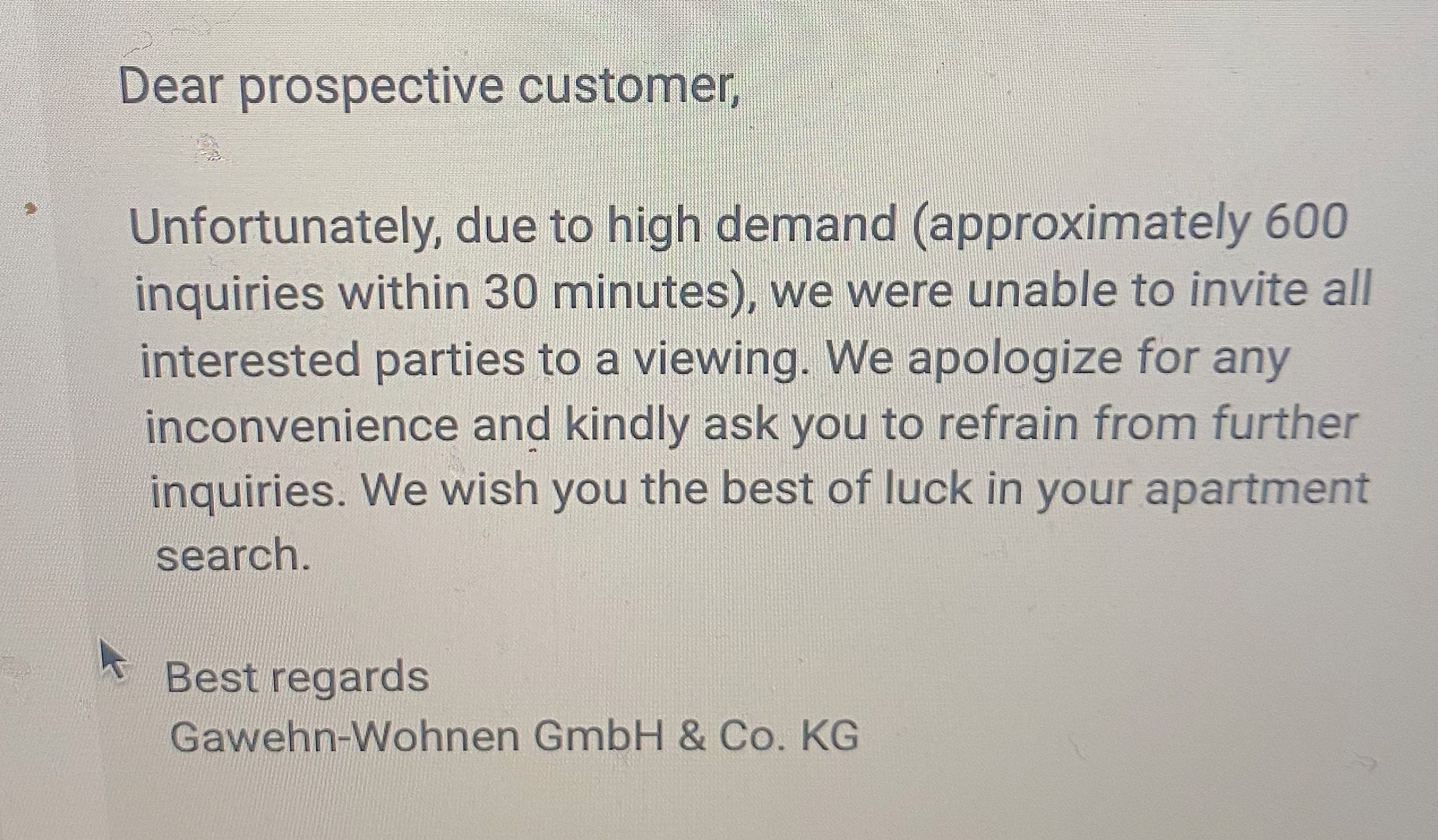
Finding housing consumed every minute of my waking thoughts for months, and I was genuinely terrified that I would not find a place to live and would bounce from one illegal sublet to another indefinitely, hiding my cat from prospective landlords.
I even briefly hired a company to apply for housing on my behalf, because Berlin’s housing market is so cutthroat that such services exist.
Now, when people realise I’m new to the city, the first question they often ask is whether I’ve found permanent housing. When I say I have, that’s usually met with amazement, followed by a story about someone they know who was in temporary housing for years, sometimes subletting from subletters.
People say it’s hard to leave Berlin. I’m now convinced that’s because no one wants to give up their Anmeldung.
I was also navigating the housing market while in a demanding job, often editing news articles from across Europe for 10 or 11 hours a day without leaving my desk. I’m not kidding when I say I didn’t see daylight.
From October through February, my life consisted of working long hours, desperately looking for housing, going to German language classes when I got out of work on time, and spending time with my partner, who often had to watch me weep from anxiety and frustration.
Even when my friends came to visit, my beloved group who come from across Europe to meet me every few months, I spent our first night together crying on the sidewalk. I was, frankly, a mess.
It was a sad winter.
A reality check
All of this gave me a totally new perspective on what it means to be an immigrant.
I was in a new, demanding job in which I needed to prove myself, in a new country where I barely spoke the language, and was completely housing insecure.
I don’t remember when I last felt so vulnerable. The very real possibility of failing was constantly dancing before my eyes.
And even though Berlin is generally a very English-friendly city, it’s also a place where locals are often annoyed (and rude) when people can only speak English.
Many people working in hospitals or other places you go for real-life stuff only speak German. Trying to navigate taxes and doctors’ appointments and every manner of everyday life in a language you only speak at an A2 level is, I have to admit, really bloody hard, especially when you are harried and don’t have the luxury of taking time to figure things out.
(And before you ask, yes, I’m sympathetic to locals who are tired of hipster foreigners taking over their city and not even trying to speak the language. But FFS, I just arrived, and I’m trying my best to integrate. Give me a tiny break.)
Ironically, my language learning plateaued after I arrived in Germany because I was so busy I didn’t have time to study.
I am generally pretty good with languages, and even though I’ve lived in many countries, those have often been places where I could, in fact, speak the local language fluently, or at least the lingua franca. Being this inept in German while having to navigate this much life was destabilising.
The experience made me realise how lucky I am that this level of vulnerability is foreign to me.
All of us have to grapple with things that are beyond our control. But when you’re in a prolonged state of limbo, it has a way of changing you, of making you feel less like your true, powerful self.
I’m aware that I have a range of abilities and resources. If this move was difficult for me, imagine how hard it could be for someone else. See, for example, this article on the exploitation of South Asian workers in Berlin.
There are many people in the world who move to new countries because they have to. They, too, work long hours, are housing-insecure, and are unable to speak the language as they navigate a new system. Many of those people have fewer opportunities and privileges than I do. Be compassionate.
When the doctor will be there “soon”
As soon as my housing situation was resolved, I turned to another major item on my to-do list: healthcare. One good thing about Germany is that health insurance is mandatory. Everyone has it, and it costs a percentage of whatever you make, so everyone pays the same percentage, and the amount you pay decreases if you make less money. Once you’ve paid your monthly percentage, you can go to the doctor as many times as you like at no extra charge. All procedures are covered without a co-pay.
This system seems very fair and just to me, even if the percentage of income you pay for healthcare, roughly 16%, does seem absurdly high. German healthcare is the most expensive in Europe.
Nevertheless, I haven’t had an easy time with the German healthcare system.
Some longtime readers will know that I had cancer as a teenager. One thing they don’t immediately tell you about cancer is that even after you have beaten it, it continues to haunt you throughout your life.
In fact, the farther away you are from your original diagnosis, the higher the risk that the treatment they used to cure you will cause some other type of cancer.
In my case, that means I am required to get scanned every six months for the rest of my life. The medical recommendations are very clear.
Before I moved to Germany, my U.S. doctors looked into whether the medical recommendations for follow-up treatment are the same in Europe. They are, so no one suspected that getting the care I needed would be a problem. Boy, were we wrong.
Germany’s public healthcare system has, so far, flat-out refused to provide me with the scans that medical science says I need. Instead of getting scanned every six months, they want to scan me once a year using a technology that isn’t as good at detecting early-stage cancer.
Now, after months of back-and-forth with doctors, I have learned that I might be able to get the scans I need if I travel to a city 2.5 hours outside Berlin. The whole process has been deeply infuriating.
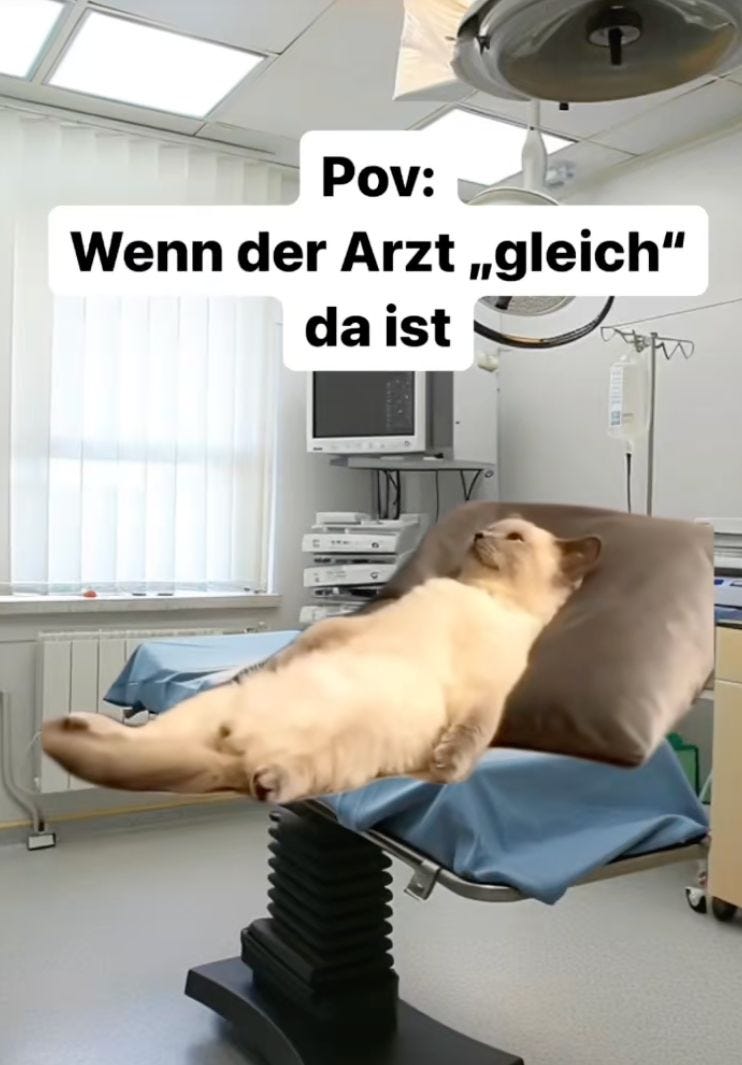
Then, following my first scan in the country, they sent me to get a biopsy. This has happened to me before. In 2023, in fact, I had three. But that doesn’t make the experience any less terrifying. You are poked and prodded and then asked to wait days or weeks to find out if you have cancer again.
Just a few months after my arrival in Germany, I found myself in the Charité hospital in Berlin – the same sprawling hospital where Alexey Navalny was treated after Russian President Vladimir Putin poisoned him the first time – with three doctors standing over me, stabbing and sawing at me repeatedly with needles, and discussing their fears that, because my tissue is so dense, they might accidentally puncture a lung. When I eventually got up from the table, numb but somewhat traumatised, I saw that it was soaked in blood.
The doctors assured me they would call me on Monday with the results, but they didn’t. After several angry phone calls and emails, I was informed days later that I am probably fine.
I’m not writing this to warn everyone against moving abroad. In general, my situation may be more complicated than yours.
In fact, I’ve laid this out so you can make an informed decision if you ever feel inspired to move to Berlin. I’ve definitely learned a lot over the last few months, and maybe some of that could be helpful for your move.
I now have an abundance of information on navigating healthcare, housing, expat taxes, English-speaking vets (who are much nicer than the doctors for humans), and haircuts for curly-haired people in Berlin, so feel free to hit me up if you want some advice.
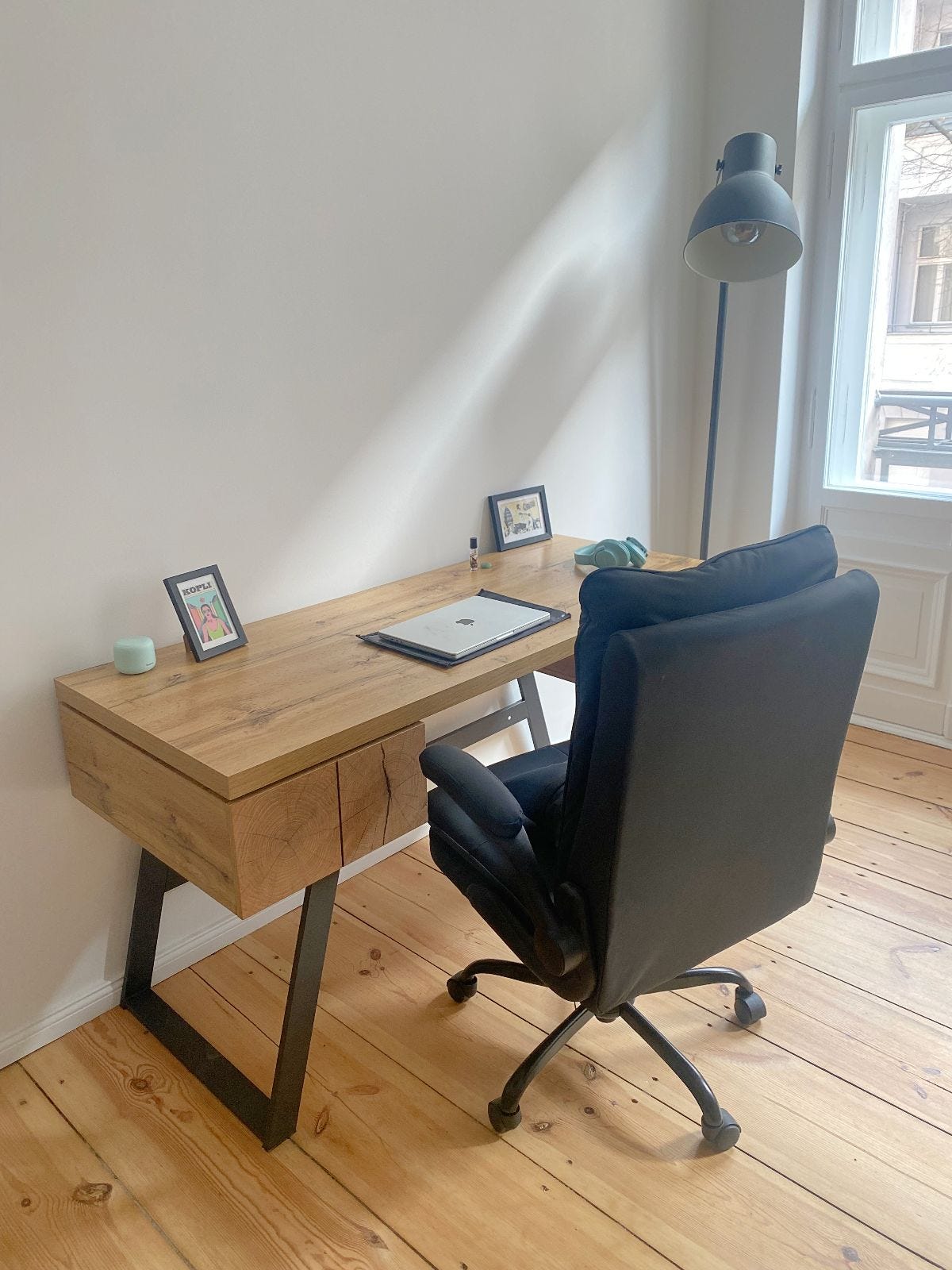
Today, I am sitting in my gorgeous apartment, in a neighbourhood I adore, writing from my beautiful new desk, accompanied by my cat and the man I love. I have an Anmeldung in the place I actually live. My latest biopsy was benign, and the spring sun is slowly peaking through my living room window to warm my shoulders. Berlin in the spring and summer is an absolute joy, and I’m now starting to have some breathing room to enjoy it all.
Mostly, I feel lucky to be alive. I just feel lucky, period.
After this gruelling winter, I once again believe that everything will be alright, that things will only get easier from here. I know how few people can say that.
Have you moved countries recently? Do you plan to? Write and tell me about it: c.maza@protonmail.com
Glad to know you're getting settled in. Your writing will improve once you tire of all nighters at Maxxim.